
Scrap 1/2
The first part of the thirty-fifth tale from The Animal Book
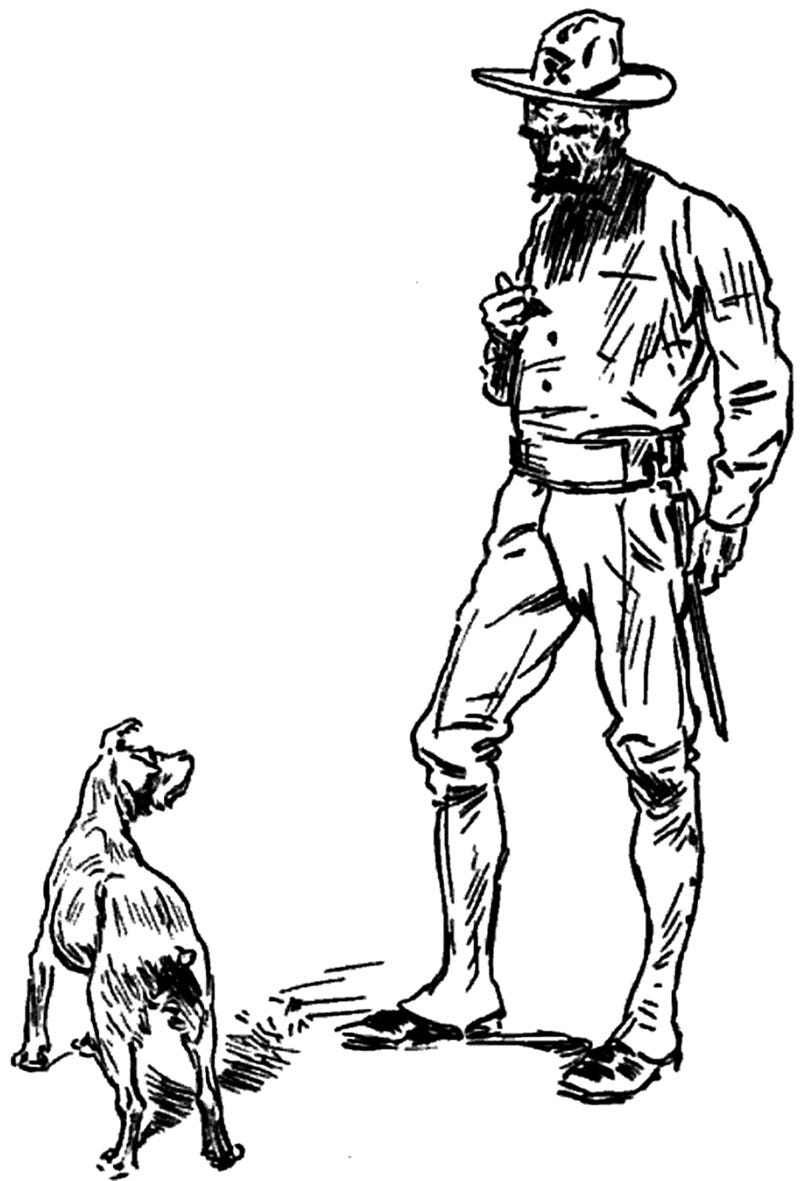
At the gray end of the afternoon, the regiment of twelve companies went through Monterey on its way to the summer camp, a mile out on the salt meadows, and it was here that Scrap joined it. He did not tag at the heels of the boys who tagged the last company or rush out with the other dogs who barked at the band, but he appeared, somehow independent of any surroundings, and marched, ears alert, stump tail erect, one foot in front of the tall first lieutenant who walked on the wing of Company A.
The lieutenant was self-conscious and so fresh to the service that his shoulder straps hurt him. He failed to see Scrap, who was very small and very yellow, until in quickening step he stumbled over him and all but measured his long length. He aimed an accurate kick that sent Scrap flying to the side lines, surprised but not vindictive, where he considered, his head cocked. With the scratched ear pricked and the bitten ear flat, he passed the regiment in review until Company K came by with old Muldoon, the sergeant on the flank.
As lean, as mongrel, as tough, and as scarred as Scrap, he carried his wiry body with a devil-may-care assurance, in which Scrap may have recognized a kindred spirit. He decided in a flash. He made a dart and fell in abreast the sergeant of Company K. Muldoon saw and growled at him.
“Gr-r-r-r!” said Scrap, not ill-naturedly, and he fell back a pace. But he did not slink. He had the secret of success. He kept as close as he could and yet escape Muldoon’s boot. With his head high, ears stiff, tail up, he stepped out to the music.
Muldoon looked back with a threat that sent Scrap retreating, heels over ears. The sergeant was satisfied that the dog had gone, but when camp was reached and ranks were broken, he found himself confronted by a disreputable yellow cur with a ragged ear cocked over his nose. His heart, probably the toughest thing about him, was touched by this fearless persistence.
“Ar-ren’t ye afraid o’ nothin’, ye little scrap?” he said. Scrap, answering the first name he had ever known, barked shrilly.
“What’s that dog doing here?” said the tall lieutenant of Company A, disapprovingly.
“I’m afther kickin’ him out, sor,” explained Muldoon. Upon the lieutenant’s departure, he was seen retreating in the direction of the cook-tent with the meager and expectant Scrap inconspicuously at his heels.
He went to sleep at taps in Muldoon’s tent, curled up inside Muldoon’s cartridge belt, but at reveille the next morning the sergeant missed him. Between drill and drill Muldoon sought diligently, with insinuations as to the character of dog-stealers that were near to precipitating personal conflict. He found the stray, finally, in Company B street, leaping for bones amid the applause of the habitants.
Arraigned collectively as thieves, Company B declared that the dog had strayed in and remained only because he could not be kicked out. But their pride in the height of his leaps was too evidently the pride of possession, and Muldoon, after vain attempts to catch the excited Scrap, who was eager only for bones, retired with threats of some vague disaster to befall Company B the next day if his dog were not returned.
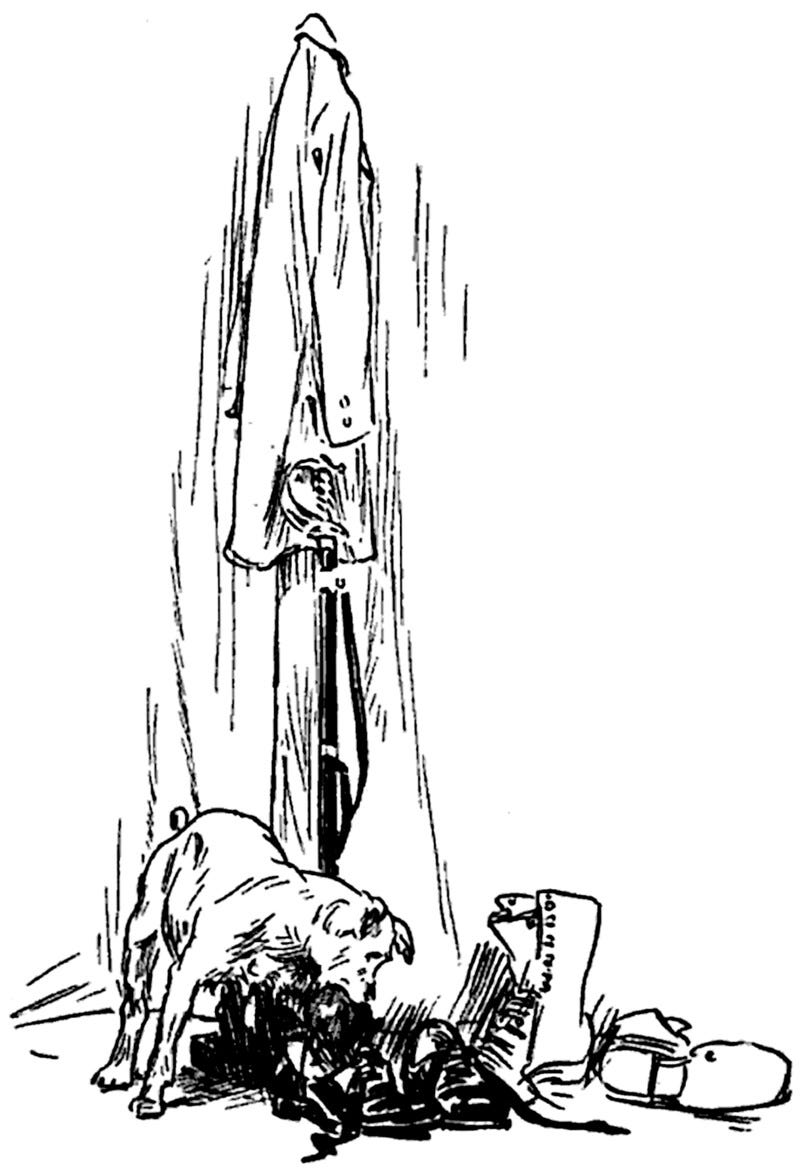
The responsibility, with its consequences, was taken out of Company B’s hands by Scrap’s departure from their lines immediately after supper. He was not seen to go. He slid away silently among the broken shadows of the tents. Company B reviled Muldoon. Scrap spent the night in a bugler’s cape, among a wilderness of brasses, and reappeared the next morning at guard mount, deftly following the stately maneuvers of the band.
“Talk about a dorg’s gratitude!” said the sergeant of Company B, bitterly, remembering Scrap’s entertainment of the previous evening.
“I’m on to his game!” muttered old Muldoon. “Don’t ye see, ye fool, he don’t belong to any wan of us. He belongs to the crowd—to the regiment. That’s what he’s tryin’ to show us. He’s what that Frinchman down in F calls a– a mascot, and, be jabers, he moves like a soldier!”
The regiment’s enthusiasm for Scrap, as voiced by Muldoon, was not extended to the commanding officer, who felt that the impressiveness of guard mount was detracted from by Scrap’s deployments. Also the tall lieutenant of Company A disliked the sensation of being accompanied in his social excursions among ladies who had driven out to band practice by a lawless yellow pup with a bitten ear. The lieutenant, good fellow at bottom, was yet a bit of a snob, and he would have preferred the colonel’s foolish Newfoundland to the spirited but unregenerate Scrap.
But the privates and noncoms judged by the spirit, and bid for the favor of their favorite, and lost money at canteen on the next company to be distinguished as Scrap’s temporary entertainers. He was cordial, even demonstrative, but royally impartial, devoting a day to a company with a method that was military. He had personal friends—Muldoon for one, the cook for another—but there was no man in the regiment who could expect Scrap to run to his whistle.
Yet independent as he was of individuals, he obeyed regimental regulations like a soldier. He learned the guns and the bugles, what actions were signified by certain sounds. He was up in the morning with the roll of the drums. He was with every drill that was informal enough not to require the presence of the commanding officer, and during dress parade he languished, lamenting, in Muldoon’s tent.
Barking furiously, he was the most enthusiastic spectator of target practice. He learned to find the straying balls when the regimental nine practiced and betrayed a frantic desire to retrieve the shot that went crashing seaward from the sullen-mouthed cannon on the shore. More than once he made one of the company that crossed the lines at an unlawful hour to spend a night among the crooked ways of Monterey.
The End, Part One